
The Northern Sea Route: Russia’s Arctic Instrument of Maritime State Power
In August 2026, Chinese shipping company Sea Legend launched the first regular container shipping service through the Arctic. The first vessel, Dubai Tower, departed Ningbo on 15 August and reached the United Kingdom via Russia’s Northern Sea Route on 9 September. The weekly service, branded the “Ice Silk Road”, connects Ningbo on China’s east coast with Felixstowe in the United Kingdom via Russia’s northern coast. Depending on Arctic conditions, the route could cut the usual journey of around 40 days by approximately half. It follows a record 23 transits of the Northern Sea Route (NSR) during the previous summer, compared with 15 in 2024. [1]
The development has once again raised the prospect of the Arctic emerging as an alternative maritime corridor between Europe and Asia. Yet focusing primarily on whether the NSR can compete commercially with established routes such as the Suez Canal risks overlooking its more immediate strategic significance. Recent instability around traditional maritime chokepoints has demonstrated the vulnerability of global shipping to geopolitical disruption. At the same time, Russia’s full-scale invasion of Ukraine and the resulting Western sanctions have fundamentally changed Moscow’s economic relationship with Europe and increased the importance of trade routes, infrastructure and export channels over which Russia can exercise greater control. The strategic value of the Northern Sea Route should therefore no longer be measured primarily by global shipping volumes. Instead, it should be understood through the control, resilience and geopolitical leverage it can provide Russia. From its icebreaker fleet and Arctic infrastructure to its regulatory authority over shipping and growing economic relationship with China, the NSR is increasingly becoming not simply a prospective commercial shortcut, but an instrument of Russian state power.
A Route Whose Strategic Context Has Changed
Russia’s interest in the Northern Sea Route pre-dates the full-scale invasion of Ukraine. Moscow’s 2020 Arctic strategy already identified the development of Arctic resources and expansion of the NSR as long-term priorities, alongside ambitions to increase its role in international shipping. [2]
What changed after February 2022 was the strategic environment in which these ambitions are pursued. Russia’s invasion accelerated the breakdown of its economic relationship with Europe and triggered sanctions targeting trade, technology, finance and energy. These measures increasingly extend into the Arctic. In 2024, for example, the EU restricted investment, goods and services for Russian LNG projects under construction, including Arctic LNG 2, while also targeting the transshipment of Russian LNG through EU ports. [3]
Sanctions have constrained Russia’s Arctic ambitions, particularly in its access to Western technology, investment and services. At the same time, the loss of traditional European markets has increased Moscow’s incentive to redirect energy exports towards Asia and develop infrastructure that provides alternative export options. The NSR increasingly serves this purpose. By September 2026, Russian crude shipments through the NSR to China had continued to increase, with the route supporting steady flows towards the Chinese market. [4]
The result is a strategic paradox: Western pressure makes development of the Russian Arctic more difficult, while simultaneously increasing the value to Moscow of infrastructure and maritime routes that can strengthen its economic resilience and deepen its links with Asian markets.
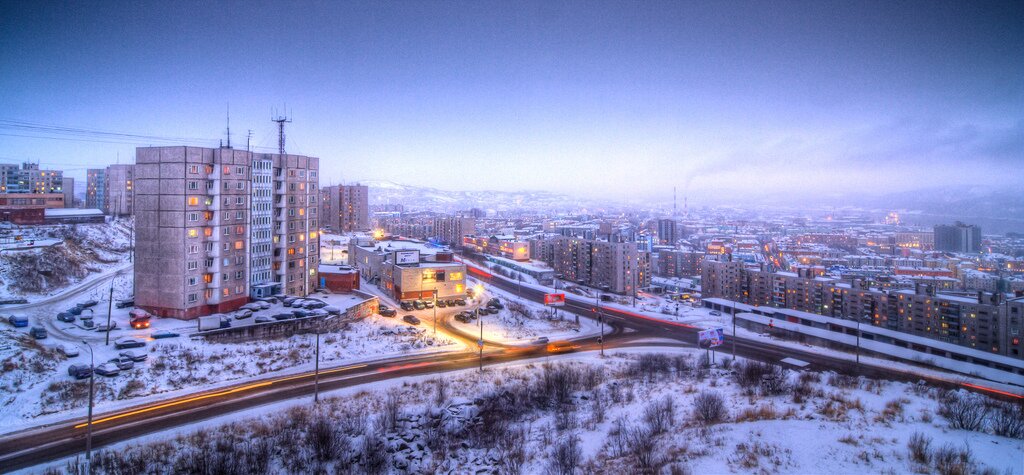
Murmansk harbor city in Russian Arctic. Tom Thiel, CC BY 2.0
Maritime Insecurity Makes Control Valuable
Western efforts to constrain Russian energy revenues increasingly extend beyond financial sanctions to the vessels carrying Russian exports. European states have intensified pressure on Russia’s so-called “shadow fleet”, while the EU has progressively expanded restrictions on vessels involved in circumventing sanctions. By April 2026, 632 vessels had been designated under the regime and subjected to restrictions, including port-access and maritime-service bans. [5] This creates a vulnerability for Moscow that is fundamentally geographical. Russia can sustain a large sanctions-evading commercial fleet, but it cannot provide the same degree of protection to those vessels everywhere they operate. Russia’s capacity to protect shadow-fleet tankers is considerably more limited beyond its adjacent maritime areas, where Russian naval power cannot easily prevent enforcement actions by other states. [6] The NSR changes this geography. Rather than sending eastbound trade through maritime spaces far removed from Russian territory, it provides a corridor running along Russia’s northern coastline. This does not place vessels beyond the reach of sanctions, and sanctioned vessels remain necessary for some Russian Arctic exports. What it does offer is the possibility of keeping a larger portion of Russia’s trade with Asia within a maritime environment where Moscow’s ability to regulate shipping, provide icebreaker assistance, operate military assets and support vessels is comparatively greater. The distinction is therefore not between sanctioned and unsanctioned trade, but between trade conducted far from Russian power and trade conducted much closer to it.
Russia Controls More Than the Coastline
Russia’s influence over the Northern Sea Route extends beyond geography and physical infrastructure. Moscow has also constructed a domestic regulatory framework through which it exercises considerable authority over navigation along the route. Foreign commercial vessels are required to apply for permission to navigate the NSR and comply with Russian requirements concerning reporting, navigation and, where applicable, icebreaker assistance. [7] Yet the extent of Russia’s authority is not uncontested. A central legal basis invoked by Moscow is Article 234 of the United Nations Convention on the Law of the Sea (UNCLOS). The provision gives coastal states enhanced powers to adopt and enforce non-discriminatory pollution-control measures in ice-covered areas within their exclusive economic zones where severe climatic conditions and ice create exceptional hazards to navigation. Russia’s 2012 Northern Sea Route legislation explicitly drew on this provision when establishing its regulatory regime. [8]
Article 234, however, does not give Russia unrestricted sovereignty over the NSR. The route passes through maritime zones with different legal regimes, including internal waters, territorial seas and Russia’s exclusive economic zone. UNCLOS preserves navigational rights within these zones, while Russia’s NSR rules have been criticised for applying a largely uniform permission-based regime without sufficiently distinguishing between them. [7] The legal position of foreign warships is even more sensitive: Article 234 concerns marine pollution and does not provide a general legal basis for subjecting sovereign immune vessels to Russia’s commercial navigation regime. Climate change creates a further challenge. Article 234 applies specifically to areas that are ice-covered for most of the year. As Arctic ice retreats and navigation becomes increasingly possible, the legal basis for Russia’s exceptional regulatory powers may consequently narrow. Recent German analysis has already identified the continued applicability of Article 234 as an emerging question for European Arctic policy. [9]
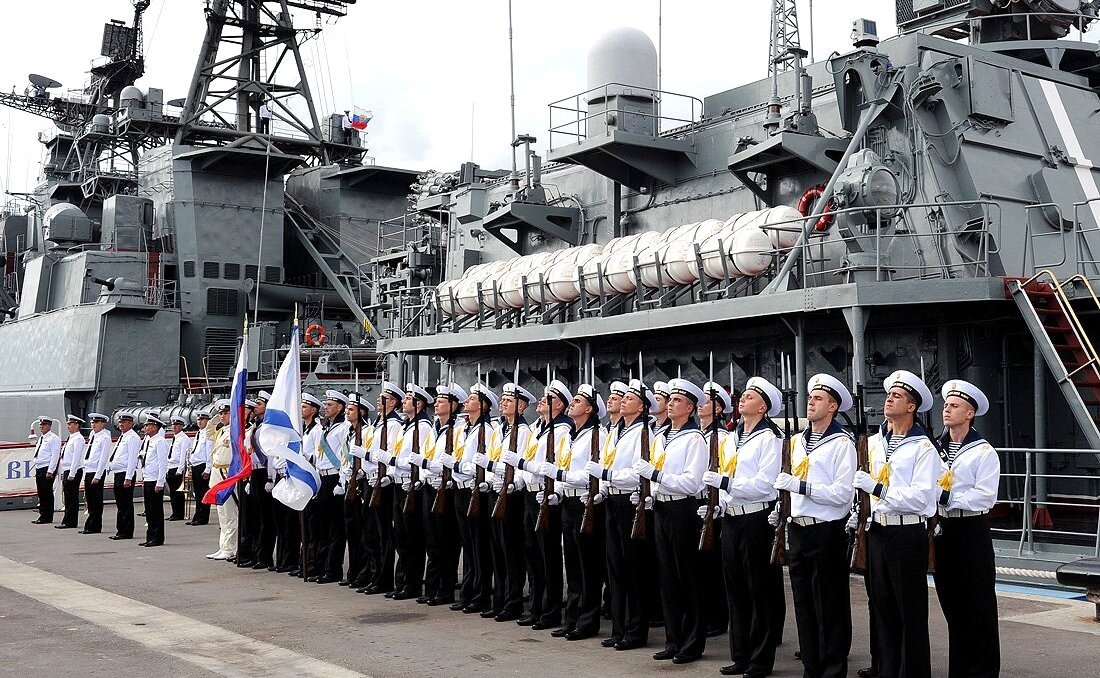
Russian Navy on drills, 2014. CC BY Kremlin
Yet the NSR also terminates in a geographic needle hole. Every vessel entering or leaving the NSR from the Pacific must pass through the Bering Strait, the only maritime gateway between the Pacific and Arctic Oceans. At its narrowest, the strait is approximately 85 kilometres wide and is divided by the Diomede Islands, where Russian and US territory lie less than four kilometres apart. [10] The comparison to the Suez Canal is instructive. Whereas Egypt exercises territorial control over the infrastructure forming the Suez Canal chokepoint, the Bering Strait is a natural international strait shared between Russia and the United States, where international shipping enjoys transit passage. [11] This limitation is also legal: the transit-passage regime set out in Articles 37-44 of UNCLOS prevents Russia, as a party to the Convention, from suspending passage through an international strait. The United States is not party to UNCLOS but regards its principal navigational provisions as reflecting customary international law. Russia may therefore seek to regulate the NSR as a strategic corridor along its Arctic coast, but it cannot exercise equivalent unilateral control over the narrow gateway connecting the corridor to the Pacific. Under international law reflected in Articles 37-44 of UNCLOS, this limitation is more than geographic. Article 34 preserves the sovereignty and jurisdiction of the states bordering an international strait, but Article 38 establishes the right of transit passage for continuous and expeditious navigation, while Article 44 provides that such passage may not be suspended. Russia can therefore regulate matters such as navigational safety and pollution withing areas under its jurisdiction, but Article 42 prevents such measures from having the practical effect of denying, hampering or impairing transit passage. [12] This tension is strategically important. Russia has built a system that allows it to exert substantial practical influence over access to and navigation along the NSR, but that influence should not be confused with uncontested legal sovereignty. The route’s value to Moscow lies partly in this combination of geography, infrastructure and regulatory power: even where the outer limits of that power remain disputed under international law.
China Gives the Route a Second Life
China’s growing involvement in the Russian Arctic gives the Northern Sea Route an additional source of strategic relevance. As Russia’s economic relationship with Europe has deteriorated, China has become increasingly important as a market for Russian energy and as a partner in Arctic development. Chinese companies have invested in major Russian Arctic energy projects, including Yamal LNG and Arctic LNG 2, while Chinese involvement extends into financing, construction, technology and shipping. [13] That cooperation has continued despite sanctions: in September 2026, two U.S.-sanctioned heavy-lift vessels departed China carrying power-generation modules intended for Arctic LNG 2. The emergence of regular Chinese container traffic along the NSR therefore forms part of a broader economic relationship rather than an isolated experiment in Arctic shipping.
This cooperation is best understood neither as a formal alliance nor as a simple relationship of dependency. Contemporary authoritarian states do not need a common ideology or identical geopolitical objectives to cooperate effectively. Instead, networks of economic, political and strategic support can develop where interests overlap, particularly when they help participating states reduce their vulnerability to Western pressure. [14] The Sino-Russian relationship in the Arctic reflects this dynamic particularly clearly. Their interests in the NSR are complementary, but not identical. Russia benefits from Chinese demand, investment and shipping activity that can help sustain Arctic infrastructure and provide alternative markets for its resources. China gains greater access to Russian energy and an additional maritime connection with European markets that reduces its reliance on traditional shipping corridors. At the same time, Moscow remains protective of its sovereignty and privileged position in the Russian Arctic, while Beijing has consistently sought a greater role in Arctic governance and economic development.
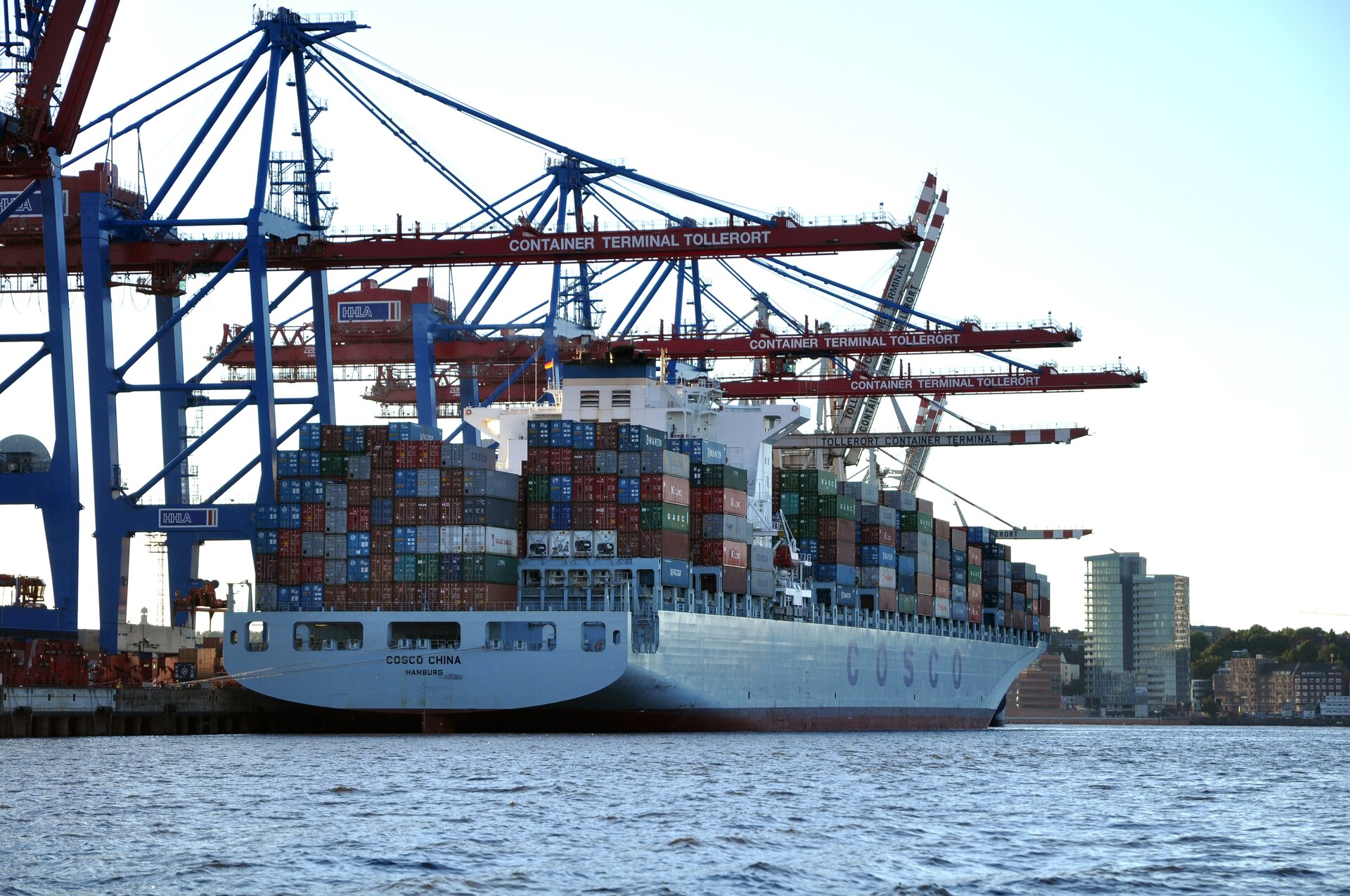
Container ship COSCO China, Container Terminal Tollerort, Hamburg, Sacrotomato_hr CC BY 2.0
The significance of China’s growing use of the NSR therefore extends beyond the number of vessels making the journey. Chinese participation can help transform infrastructure developed primarily under Russian control into a more resilient economic and strategic corridor. For Moscow, this gives the NSR something increasingly important under sanctions: not independence from the international economy, but an alternative network through which trade, investment and strategic cooperation can continue.
Conclusion: Strategic Infrastructure, Yes - But Not a Second Suez
The future significance of the Northern Sea Route will not depend on whether it ever rivals the Suez Canal in shipping volumes. Its limitations remain substantial. Arctic navigation is difficult, sanctions constrain Russia’s access to technology and investment, and Moscow’s authority over the route is neither geographically complete nor legally uncontested. Yet judging the NSR primarily against established global shipping corridors misses the strategic value it already provides.For Russia, that value increasingly lies in optionality. The NSR provides an additional route towards Asian markets, keeps a greater share of eastbound trade closer to Russian infrastructure and state power, and gives Moscow considerable practical and regulatory influence over navigation along much of its Arctic coastline. Growing Chinese involvement further strengthens that utility by providing markets, investment and shipping demand at a time when Russia’s economic relationships with Europe have sharply deteriorated.
The NSR therefore does not allow Russia to escape Western sanctions or eliminate its dependence on the global economy. Nor does it need to. Its strategic importance lies in making Russia more resilient to external pressure by providing additional options for sustaining trade, exporting energy and developing alternative economic relationships. The Northern Sea Route should consequently be understood less as Russia’s answer to the Suez Canal than as an instrument of maritime state power: infrastructure through which Moscow can convert geography into greater economic resilience, strategic flexibility and geopolitical leverage.
[1] https://www.ft.com/content/4456f475-f2c8-4cb7-8312-0c47c5f781b8?syn-25a6b1a6=1
[2] https://www.swp-berlin.org/en/publication/russias-arctic-strategy-through-2035
[3] https://www.consilium.europa.eu/en/press/press-releases/2024/06/24/russia-s-war-of-aggression-against-ukraine-comprehensive-eu-s-14th-package-of-sanctions-cracks-down-on-circumvention-and-adopts-energy-measures/
[4] https://www.reuters.com/business/energy/russian-oil-supply-india-tightens-reduced-exports-strong-chinese-demand-2026-09-28/
[5] https://www.consilium.europa.eu/en/press/press-releases/2026/04/23/russia-s-war-of-aggression-against-ukraine-20th-round-of-stern-eu-sanctions-hits-energy-military-industrial-complex-trade-and-financial-services-including-crypto/
[6] https://www.swp-berlin.org/10.18449/2026A17
[7] https://www.cambridge.org/core/journals/leiden-journal-of-international-law/article/polar-silk-road-and-the-future-governance-of-the-northern-sea-route/DDDD1490B22BEB2493BF7D6BDE54152B
[8] https://www.sipri.org/sites/default/files/2021-09/no._25.pdf
[9] https://www.swp-berlin.org/10.18449/2026RP06
[10] https://www.nauticalcharts.noaa.gov/hsrp/meetings/juneau-2018/reference-materials/arctic-nautical-charting-plan%202016.pdf / https://nauticalcharts.noaa.gov/updates/charting-the-arctic-noaa-ship-fairweather-2025-alaska
[11] https://www.un.org/depts/los/convention_agreements/texts/unclos/part3.htm
[12] https://www.un.org/depts/los/convention_agreements/texts/unclos/part3.htm
[13] https://www.csis.org/analysis/arctic-energy-security
[14] Autocracy, Inc.: The Dictators Who Want to Run the World July 23, 2024 By Anne Applebaum, Doubleday, 2024. 224 pp. ISBN: 978-0-385-54993-6